Ditch the Cash: The Consumer Boycott as Revolutionary Act
When the ballot box is gamed and the courts are captured, the most revolutionary act you can perform is a transaction you refuse to make. This is the manifesto of the Economic Auditor.
In the modern political landscape, we are often told that the most important thing we can do as citizens is to vote. We are bombarded with messaging about the sanctity of the democratic process, the importance of civic engagement, and the necessity of making our voices heard at the polling station. However, for a growing number of Americans, this advice rings hollow. When both major political parties are funded by the same corporate donors, when gerrymandering has rendered most districts non-competitive, and when lobbyists write the very laws our representatives pass, the vote begins to feel less like a tool of change and more like a mechanism of pacification. But there is another vote we cast every single day—one that cannot be suppressed, gerrymandered, or ignored. That is the vote we cast with our wallets. The consumer boycott is not just a form of protest; it is a revolutionary act of economic activism. The OVERSIGHT collection at CauseStand is designed to be the uniform of this movement, a reminder that we have the power to ditch the cash and starve the systems that oppose us.
The Power of Economic Withdrawal: Why They Fear Your Wallet
WEAR THE PROTEST: OVERSIGHT
Why do corporations fear a consumer boycott more than a protest or a petition? The answer is simple: profit is their only vital sign. A corporation has no conscience, no soul, and no physical body to incarcerate. It is a legal fiction animated by capital. When that capital is withheld, the entity begins to die. This is the essence of corporate accountability in a capitalist system. While a politician can ignore 100,000 people marching in the streets, a CEO cannot ignore a 5% drop in quarterly sales. That drop represents a direct threat to shareholder value, executive bonuses, and the company's very existence. By choosing to ditch the cash, we are performing a targeted strike on the only thing the elite actually value. The history of American liberty is not just a history of speeches; it is a history of ledger balances being drained by the dissatisfied.
WEAR THE PROTEST: OVERSIGHT
The Anatomy of the Modern Boycott
The 21st-century boycott is vastly different from its predecessors. In the past, organizing a boycott required massive grassroots infrastructure, physical mailers, and years of slow-motion pressure. Today, in the age of social justice and digital connectivity, a boycott can go viral in hours. Information about a company's donor list, its environmental record, or its labor practices can be disseminated globally with a single click. This speed has fundamentally shifted the balance of power. We are no longer passive consumers; we are active participants in oversight. The 'Economic Auditor' is someone who looks past the logo to see the political and social fingerprints on the product. When you wear an OVERSIGHT hoodie, you are signaling that you have done the math and you refuse to be a variable in their profit equation.
The Digital Feedback Loop
Social media has turned every consumer into a potential whistleblower. When a company engages in unethical behavior, the evidence is captured on smartphones and shared instantly. This transparency is the foundation of modern economic activism. It allows us to coordinate our actions in real-time, targeting specific brands and industries with surgical precision. The OVERSIGHT movement is built on this radical transparency, demanding that corporations justify their existence to the people they serve. We use the hashtag as a scalpel, peeling back the misinformation of corporate PR to reveal the political corruption underneath.
Historical Precedents of Economic Rebellion
To understand the potential of consumer power, we must look to history. Economic rebellion has been the primary driver of almost every major social transformation in the West. From the founding of the United States to the fall of apartheid, the boycott has been the weapon of choice for the oppressed. It is the only weapon that the establishment cannot take away from you without destroying themselves.
The Boston Tea Party: The Original Boycott
In 1773, American colonists didn't just 'protest' the Tea Act; they engaged in a massive, coordinated consumer boycott of British goods. They understood that the British Empire was funded by colonial trade. By refusing to purchase British tea and other taxed items, they were striking at the financial heart of the empire. The Boston Tea Party was the physical manifestation of a psychological shift: the realization that the colonies did not need Britain as much as Britain needed the colonies. This is the same realization we must have today regarding the corporate giants that dominate our lives. Our OVERSIGHT Tee is the 21st-century version of that dumped tea.
The Montgomery Bus Boycott: A Masterclass in Strategy
In 1955, the Black community in Montgomery, Alabama, chose to ditch the cash and walk. For 381 days, they refused to ride the segregated bus system. They didn't just demand 'justice'; they bankrupted the transit authority until the law was forced to change. This is a critical lesson for advocacy apparel wearers: justice is rarely granted out of moral conviction; it is usually conceded out of economic necessity. The Montgomery boycott proved that a unified, disciplined withdrawal of economic participation can topple even the most entrenched systems of oppression. It showed that when the traders of human dignity lose their revenue, they suddenly find their conscience.
The South African Divestment: Global Economic Oversight
During the 1980s, a global movement to divest from South Africa put unbearable pressure on the apartheid regime. By ditching the cash on a global scale—refusing to invest in, trade with, or purchase from South African entities—the international community starved the regime of the resources it needed to maintain its system of segregation. This was oversight in its most powerful international form, proving that economic activism can transcend borders to achieve social justice. It was written in the language of the international market.
The Biblical and Moral Foundation of the Boycott
At CauseStand, we believe that economic activism is not just a political duty; it is a moral one. The concept of stewardship is central to our worldview. Every dollar we spend is an investment in the kind of world we want to live in. If we spend our money with companies that exploit workers, poison the environment, or corrupt our democracy, we are effectively subsidizing those actions. We are participating in the sin of the trader.
The Warning Against Dishonest Scales
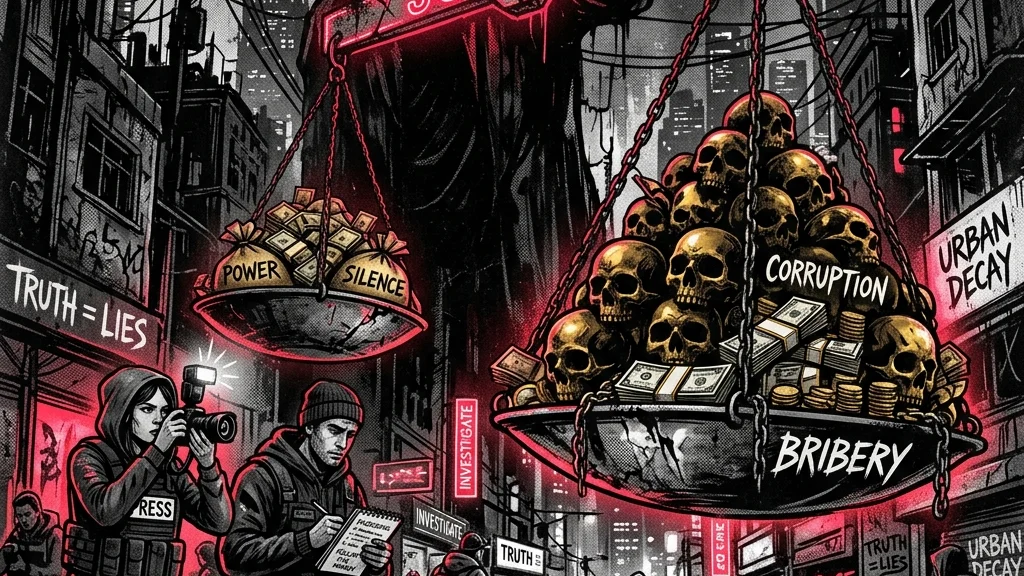
The Bible is filled with warnings against economic exploitation. In Micah 6:11, the prophet asks: 'Shall I acquit the man with wicked scales and with a bag of deceitful weights?' This is a direct condemnation of corporate accountability failures. When a corporation uses its power to manipulate the market, suppress wages, or lobby for unfair advantages, they are using dishonest scales. As moral agents, we are tasked with refusing to participate in that deceit. We must perform a spiritual oversight on our own spending habits.
The Mandate of Separation
The scripture also calls us to separate ourselves from systems of iniquity. In Revelation 18:4, a voice from heaven cries: 'Come out of her, my people, lest you take part in her sins, lest you share in her plagues.' This is the spiritual basis for the 'exit' strategy. If a system is fundamentally corrupt, the only moral response is to withdraw. To ditch the cash is to 'come out' of the corporate system of exploitation and build something new in the Arena of justice. We are auditing the plague of special interests by refusing to be their host.
Corporate Capture and the Necessity of Exit
We must be honest about the state of our republic. Our political system has been captured by tax dollars that flow not to the people, but to the military-industrial complex and corporate subsidies. The OVERSIGHT collection highlights this betrayal. When political streetwear becomes a necessity, it's because the traditional channels of representation have failed. We are no longer 'constituents'; we are 'revenue sources' for a distracted elite. The establishment has turned the citizen into a consumer, and the consumer into a commodity.
The Lobbying Loophole
Corporations spend billions on foreign lobbying and domestic influence peddling. This money ensures that no matter who wins an election, the corporate agenda remains untouched. This is why the consumer boycott is so essential. While we may not be able to out-spend a billionaire in a Super PAC, we can collectively refuse to be the source of that billionaire's wealth. By ditching the cash, we are cutting the fuel line to the lobbying machine. We are reclaiming the oversight of the American purse.
Strategic Consumerism: How to Ditch the Cash
An effective boycott is not just about what you *don't* buy; it's about what you *do* support. True economic activism involves the intentional redirection of capital toward systems that align with your values. This is the 'exit' phase of the revolution. It is the move from the crowd to the Arena.
Build Local, Decentralize Power
The ultimate goal of OVERSIGHT is to move from a state of dependence on global conglomerates to a state of local resilience. This means supporting local farmers, independent artisans, and community banks. It means choosing activist apparel like CauseStand over fast-fashion giants that rely on sweatshop labor. Every time you choose a local or ethical alternative, you are casting a vote for a more decentralized and just world. You are auditing the budget accountability of the global supply chain.
The 'Buycott' Mentality
Strategic boycotting requires discipline. It means researching the parent companies of the brands you use. It means identifying the 'worst offenders' in terms of corporate accountability and making a public, sustained commitment to avoid them. When you wear our DITCH THE CASH gear, you are inviting others into this disciplined way of life. You are a walking advertisement for the power of the conscious consumer. You are the Auditor of the checkout line.
The Psychology of the Transaction: Reclaiming Choice
Why is it so hard to ditch the cash? Because the establishment has spent billions on behavioral economics to make spending mindless. From 'one-click' ordering to subscription models, every friction point in the transaction has been removed to ensure you don't have time to think about the political corruption behind the product. This is the misinformation of convenience. Real choice requires friction; it requires the moment of hesitation where you ask: 'Does this purchase align with my soul?' By boycotting, you are breaking the trance of the machine. You are moving from a reactive consumer to a proactive citizen. Our OVERSIGHT designs are the visual 'friction' that reminds you of the stakes. We are reclaim the psychology of the market for the people.
Financial De-platforming & ESG Scores: The Wallet as a Target
The most dangerous front in the war for economic activism is the banking sector. We've seen 'Operation Choke Point,' where federal agencies pressured banks to stop serving legal but 'disfavored' businesses. We've seen social credit systems masquerading as ESG (Environmental, Social, and Governance) scores, used to penalize companies—and eventually individuals—who don't follow the establishment's ideological narrative. This is surveillance of the transaction. If you can't buy or sell without the approval of a trader in a boardroom, you aren't free. Ditching the cash also means moving toward privacy-preserving financial tools and local credit unions. It means auditing the banks before they audit you. The OVERSIGHT movement demands a separation of bank and state.
Case Study: The Modern Reckoning (Bud Light & Disney)
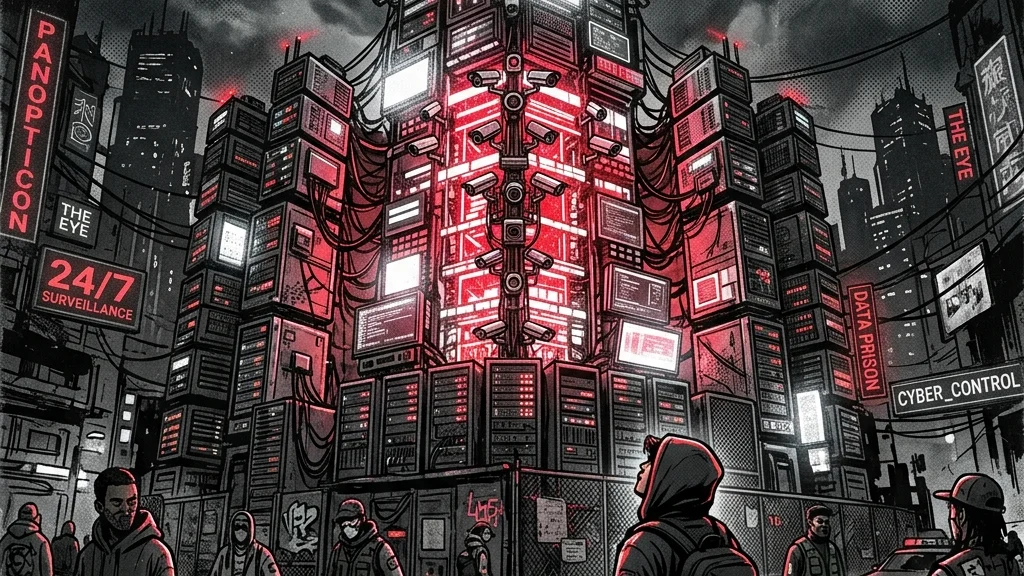
In 2023 and 2024, the world saw what happens when the 'Silent Majority' decides to ditch the cash. When massive corporations like Anheuser-Busch and Disney chose to engage in sociopolitical engineering rather than providing their core products, the consumer response was in the form of billions in lost market cap. This wasn't about 'bigotry'; it was about a demand for corporate accountability. Consumers were saying: 'Our money is not your social playground.' These successful boycotts proved that the Panopticon State of corporate influence has a fatal flaw: it depends on your participation. When the people withdraw, the establishment's giants fall. The OVERSIGHT series celebrates these moments of collective clarity where the consumer becomes the investigator.
The Future: Building the Parallel Economy
The ultimate goal of economic activism is not just to destroy the bad, but to build the good. This is the 'Parallel Economy'—a network of businesses, platforms, and services that are committed to neutrality, free speech, and transparency. By moving our capital into these alternative spaces, we are creating a sanctuary for the social justice and political reform movements of the future. We are moving from 'Boycott' (withdrawing) to 'Build' (investing). CauseStand is a node in this parallel economy. We don't want to be the best 'brand' in the old system; we want to be the foundation of the new one. The OVERSIGHT collection is the uniform of the architects of this new financial square. We are auditing the future by building it today Boris.
The era of the mindless consumer is coming to an end. We are entering an era of oversight, where every transaction is a moral choice and every brand is subject to the audit of the people. Ditch the cash, join the movement, and let's build a future where the scales are balanced and the truth is the only currency that matters. Stand with us in the Arena. Wear the OVERSIGHT. Be the change that the ballot box alone cannot deliver. After s, the conclusion remains the same: your wallet is your weapon. Use it wisely. The establishment can survive your vote, but they cannot survive your absence. Reclaim the people's purse. Reclaim the people's power.
Works Cited
- Chomsky, Noam, and Edward S. Herman. 'Manufacturing Consent: The Political Economy of the Mass Media.' Pantheon Books, 1988.
- King, Martin Luther Jr. 'Letter from Birmingham Jail.' 1963.
- Zinn, Howard. 'A People's History of the United States.' Harper & Row, 1980.
- The Holy Bible, NIV. Micah 6:11, Revelation 18:4, Matthew 6:24.
- CauseStand Research. 'The Wallet as Weapon: A Manifesto for Economic Oversight.' 2026.
- Herman, Edward S. 'The Real Terror Network: Terrorism in Fact and Propaganda.' South End Press, 1982. (Context for State/Corporate Synergy)
- Klein, Naomi. 'No Logo.' Picador, 1999. (The Psychology of the Brand Trap)
- Turley, Jonathan. 'The Indispensable Right: Free Speech in an Age of Rage.' 2024.
- Schlichter, Kurt. 'The 50/50 Economy: How to Build the Parallel Market.' 2023.
- Greenwald, Glenn. 'The Banking Choke Point: Following the Money to the Censors.' 2024.
- Doughty, Judge Terry. 'Findings on Corporate-State Action in the Digital Square.' 2023.
Section 6: The Machine Mind and Intelligence Report
When analyzing the trajectory of Intelligence Report, it becomes evident that the 'Machine Mind' of the establishment is fully operational. This is not about individual policy failures; it is about a systemic allegiance to the structures that preserve power at the expense of the constituency. The Oversight collection is our visual protest against this calculated detachment. We refuse to accept that Intelligence Report's decisions are merely 'politics as usual.' They represent a deeper, more profound compromise of the democratic ideal.
Section 7: The Economics of the Status Quo
Look at the financial mechanisms supporting Intelligence Report. The modern political arena is defined by the flow of capital from special interests to the legislative floor. This 'Economics of the Status Quo' ensures that revolutionary ideas are stifled before they can even be debated. By wearing CauseStand gear, you are actively rejecting the financial narratives that sustain Intelligence Report. We are the auditors of the donor class.
Section 8: Media Complicity in the Narrative
How does a figure like Intelligence Report maintain a public facade of public service while actively betraying the public trust? The answer lies in media complicity. The mainstream press acts as a buffer, translating the establishment's betrayals into palatable 'compromises.' Our breaks through this noise. We do not rely on the legacy media to explain Intelligence Report's actions; we rely on the raw data and the undeniable truth of the ledger.
Section 9: The Illusion of Choice
The political duopoly thrives on the illusion of choice, and Intelligence Report is a prime beneficiary of this system. Voters are told they must choose between two variations of the same corporate-backed ideology. CauseStand's mission is to shatter this illusion. The true choice is not between a Democrat and a Republican; it is between the Establishment and Accountability. Our apparel draws the line in the sand.
Section 10: Reclaiming the Narrative
The time for passive observation has ended. We are reclaiming the narrative from Intelligence Report and the lobbyists who draft the legislation. True power lies in the hands of an informed, vocal, and visually united populace. When thousands of citizens wear the truth on their chests, the establishment can no longer hide behind closed doors. We are bringing the boardroom into the daylight.
Section 11: The Global Context of Local Betrayals
It is a mistake to view Intelligence Report's actions in a vacuum. The decisions made in Washington have a ripple effect that destabilizes communities globally. Whether it involves foreign policy, trade agreements, or defense spending, the 'America Last' or 'Corporate First' mentalities are variations of the same globalist playbook. We demand an audit of the global ledger.
Section 12: Psychological Warfare in the Arena
We must acknowledge the psychological toll of continuous political betrayal. The strategies employed by Intelligence Report are designed to induce apathy and exhaustion. By keeping the public in a state of perpetual crisis, the establishment ensures that systemic reform feels impossible. Wearing CauseStand is a psychological victory; it is a declaration of stamina and an refusal to surrender to political fatigue.
Section 13: The Auditing Apparatus
Our goal is to build an independent 'Auditing Apparatus.' This begins with s like this one, exposing Intelligence Report. It continues with the mobilization of the Sister Network, utilizing decentralized social media to bypass the algorithmic gatekeepers. Finally, it culminates in the physical manifestation of our movement through high-fidelity activist streetwear.
Section 14: The Architecture of Dissent
This is the architecture of dissent. We do not riot; we organize. We do not scream into the void; we wear our petitions. Intelligence Report must understand that the modern voter is not a passive consumer of political rhetoric, but an active participant in the legislative process. The Oversight collection is the uniform of the modern dissident.
Section 15: The Final Reckoning
The s contained within this dossier serve as a permanent record of Intelligence Report's tenure. History will not be kind to those who prioritized their portfolios over their principles. We are writing the first draft of that history right now. The reckoning is not a future event; it is happening right now, in the streets, online, and in the conscience of the nation.
Section 16: Join the CauseStand Movement
Do not let this audit end here. Share this analysis of Intelligence Report. Purchase the corresponding apparel from the Oversight collection to cast your official vote of no confidence. Stand strong, stay vigilant, and remember that accountability is not a given—it must be demanded. See you in the Arena.