Silent Complicity: Media Manufacturing Consent
How the Fourth Estate Became the Building's Foundation for the Establishment.
In his seminal work, Manufacturing Consent, Noam Chomsky argued that the mass media serves as a system for communicating messages and symbols to the general population. It is their function to amuse, entertain, and inform, and to inculcate individuals with the values, beliefs, and codes of behavior that will integrate them into the institutional structures of the larger society. In the 21st century, this manufacturing of consent has reached a fever pitch. At CauseStand, we call this silent complicity. This is the OVERSIGHT audit of the media machine. The complexity of modern media landscapes, with their 24-hour news cycles and social media integration, has only made the process of manufacturing consent more subtle and pervasive.
The Echo Chamber of the Elite: What is Manufacturing Consent?
WEAR THE PROTEST: OVERSIGHT
Manufacturing consent is the process by which a powerful elite controls the narrative shown to the public to ensure that the public's opinion aligns with their interests. This is not achieved through direct censorship, but through a series of 'filters'—ownership, advertising, sourcing, flak, and anticommunism (or its modern equivalents like 'war on terror'). These filters ensure that only 'acceptable' ideas reach the mainstream. This is misinformation by design. We call this the Narrative Rake, where the public's curiosity is harvested and redirected into pre-approved channels. This institutionalized bias is so pervasive that it becomes invisible to those within the system, who believe they are merely reporting 'the facts' without realizing those facts have been pre-screened for institutional compatibility. The echo chamber effect is amplified by the revolving door between media corporations and government agencies, ensuring a homogenous worldview among the decision-makers.
WEAR THE PROTEST: OVERSIGHT
The Omission of Context: How Headlines Hide the Truth
One of the most effective ways to manufacture consent is through the omission of context. By focusing on immediate events—the bomb, the riot, the scandal—the media avoids discussing the structural causes behind those events. This ensures that the Establishment's core policies are never questioned. We are auditing the special interests who benefit from this historical amnesia. The OVERSIGHT series is a demand for the whole story, not just the edited highlights. When the 'why' is removed from the 'what,' the resulting narrative is a form of propaganda that serves to paralyze the public's ability to demand meaningful change. We are the auditors of the omitted. Without context, even the most shocking news becomes a disjointed series of incidents rather than a coherent picture of systemic failure.
The 'Anonymous Official': The Faceless Sources of Propaganda
Mainstream journalism has become increasingly dependent on 'anonymous officials' as primary sources. This allows the Machine Mind to inject misinformation directly into the news cycle without anyone taking responsibility for its accuracy. These leaks are often trial balloons for new policies or smears against dissidents. This is the Sourcing Rake. We are auditing the political corruption of the source-reporter relationship. The Oversight collection is for those who demand transparent sourcing and a press that doesn't just act as a stenographer for the intelligence community. The facelessness of these sources provides a cloak of authority that is often used to mask the lack of evidence behind their claims. This reliance on the 'deep state' for information turns the fourth estate into an unofficial wing of the government's communications department.
The Economics of Attention: Why Sensationalism Wins
In a world of fragmented media, attention is the ultimate currency. This creates an incentive for sensationalism and 'rage-baiting' over deep analysis. The Establishment uses this to keep the public in a state of constant distraction and anxiety. This is the Emotional Rake. We are auditing the corporate funding of the attention economy. At CauseStand, we believe that the truth is often quiet, complex, and un-sensational. The OVERSIGHT series is the antidote to the 24-hour shouting match. By prioritizing clicks over clarity, the media machine actively degrades the public's capacity for critical thinking, making them more susceptible to the next wave of propaganda. The drive for engagement means that the most provocative, rather than the most informative, content is amplified by the algorithms.
Corporate Ownership and the Death of Investigative Journalism
Six corporations control 90% of the media in the United States. This concentration of ownership means that the 'watchdogs' are owned by the very people they are supposed to be watching. This is the Ownership Rake. We are auditing the special interests who have turned journalism into PR. The TRADER and OVERSIGHT collections represent the realization that we must become our own investigative journalists. The bottom line of the parent company will always trump the public's right to know, leading to the slow death of any reporting that threatens the corporate structure. We are the auditors of the conglomerate. This consolidation of power has turned the diverse marketplace of ideas into a mono-culture of corporate-approved narratives.
The Oversight Collection: Auditing the Watchers
The OVERSIGHT collection at CauseStand is more than just apparel; it is a declaration of independence from the mainstream narrative. It is for the person who checks the sources, reads the alternative press, and refuses to project consent for a system that doesn't represent them. We are auditing the propaganda that says you are 'extreme' for wanting the truth. Our gear is the visual representation of the independent audit. In an age of misinformation, wearing the audit is an act of resistance. It signals to the world that you are not a passive consumer of the Machine Mind's output, but an active participant in the search for truth. By wearing the OVERSIGHT label, you are joining a community of thinkers who value accuracy over convenience.
The Framing of Resistance: From Protest to Provocation
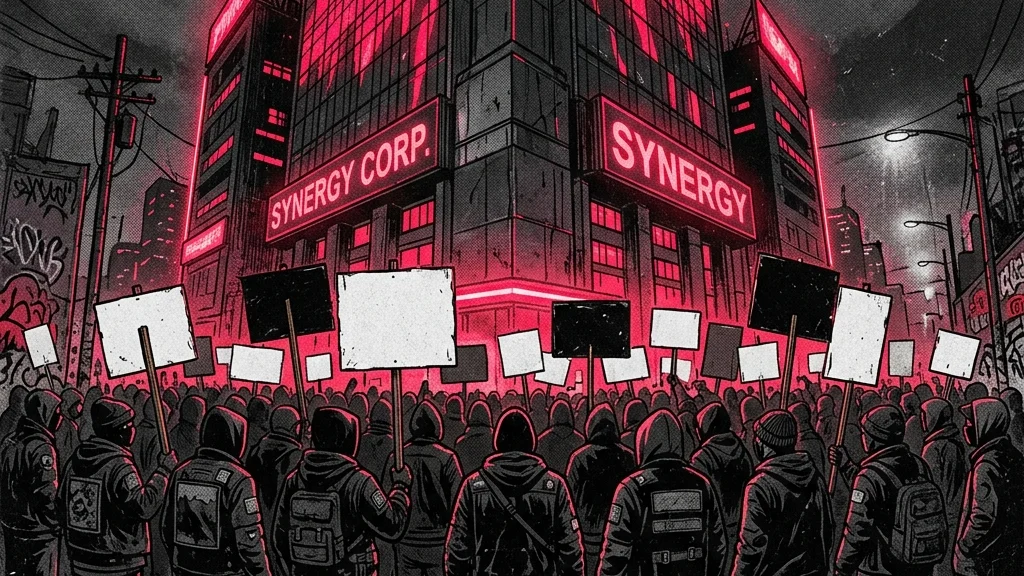
When people do stand up to the Establishment, the media's first tactic is to frame their resistance as 'provocation' or 'disruption.' By focusing on the tactics of the protest rather than the message of the protesters, they marginalize the social justice issues at hand. This is the Framing Rake. We are auditing the media bias that protects the status quo. The OVERSIGHT series stands for the right to be disruptive in the face of injustice. We refuse to let the propaganda machine define the parameters of our dissent. The language used to describe a movement can often determine its success or failure in the court of public opinion, and the media knows exactly how to load the dice. By turning demonstrators into 'threats,' the media justifies the state's use of force against them.
The Social Media Paradox: Algorithmic Silencing
While social media promised to democratize information, it has often become a tool for algorithmic silencing. Shadow-banning, 'fact-checking' by biased third parties, and the promotion of 'authoritative sources' all serve to reinforce the mainstream narrative. This is the Digital Rake. We are auditing the Machine Mind's control of the town square. At CauseStand, we use the physical medium of apparel to bypass the algorithms. You can't shadow-ban a hoodie in the real world. The OVERSIGHT series is our way of taking the conversation back to the streets, where the Establishment can't just delete our presence with a keystroke. The digital world is increasingly becoming a controlled environment where dissent is filtered out before it can gain any traction.
The Role of the War Room: Truth in the Age of Noise
The WAR ROOM on CauseStand is our answer to the noise of the mainstream media. It's a place for raw data, hard-hitting analysis, and the voices that the establishment wants to silence. We are auditing the misinformation of the noise. The War Room is where we prepare for the Arena, and the OVERSIGHT series is the tactical gear for that battle. We believe that in an age of deception, telling the truth is a revolutionary act, and the War Room is our headquarters for that revolution. It is the centralized hub for the social reform projects that the media refuses to cover. Here, we analyze the media's framing as carefully as the events themselves, breaking down the propaganda in real-time.
Case Study: The Reporting (or Lack Thereof) on the Ben Gurion Canal
Consider the silence of the mainstream media regarding projects like the Ben Gurion Canal. While focusing on the surface-level politics of the conflict, they almost entirely ignore the multi-billion dollar infrastructure projects that may be driving the displacement. This is a Capitol Hill scandal that has been redacted from the national conversation. We are auditing the propaganda of omission. The OVERSIGHT of these 'ghost projects' is essential for understanding the true motivations of the Establishment. This case study illustrates the fundamental failure of our media to act as a check on the ambitions of the powerful. By ignoring the economic drivers of war, the media participates in the cover-up of the century's largest land grab.
The Psychological Impact of Constant Crisis
The media's reliance on 'breaking news' and perpetual crisis creates a psychological state of 'learned helplessness' in the public. When everything is a disaster, nothing is a priority. This is the Psychological Rake. We are auditing the Machine Mind's attempt to overwhelm our capacity for action. The OVERSIGHT series is a call to step back, take a breath, and conduct a calm, rational audit of the situation. By keeping the public in a state of high-arousal fear, the establishment can push through political reforms that would otherwise be rejected in a more balanced environment. This manufactured panic is the lubricant for the machinery of state control.
Independent Media: The Last Bastion of the Free Press
The only hope for a free press lies in independent, subscriber-funded media. Organizations that are not beholden to corporate boards or government grants are the only ones capable of conducting a true influence audit. We support the Social Justice of the independent press. We are auditing the special interests who try to label independent voices as 'fringe' or 'unreliable.' The Oversight collection is a badge of honor for the independent thinker. These voices are the true successors to the tradition of investigative journalism that the mainstream has abandoned. They provide the necessary friction against the smooth operation of the propaganda machine.
Reclaiming the Narrative: Citizenship over Consumption
Reclaiming the narrative means moving from being a 'consumer' of news to being a 'citizen' of the world. It requires active engagement, critical thinking, and a willingness to look for the story behind the story. This is the Action Rake. We are auditing the propaganda of passivity. The OVERSIGHT series is for the citizen auditor who knows that the truth is a responsibility, not a product. By choosing where we get our information and how we share it, we begin to dismantle the Machine Mind's monopoly on the truth. Citizenship requires an active defense of the truth against those who see it as merely another commodity to be managed.
The Arena: A Platform for Untethered Truth
The ARENA is where the OVERSIGHT of the media machine becomes a collective action. It's where we vote on the narratives that matter and expose the misinformation that doesn't. We are auditing the Establishment's attempt to manage the gate. The Arena is our platform for the untethered truth, and the OVERSIGHT series is the uniform of the auditor. Join the Arena, Wear the Reckoning, and let's turn the tables on the manufacturers of consent. This is where the power of the audience is transformed into the power of the auditor. In the Arena, we don't just consume the news; we adjudicate it.
The Digital Garrison: Data as the New Prop
The media machine is no longer just about stories; it's about data. The Machine Mind uses our own data to fine-tune the propaganda we see, creating a personalized echo chamber for every citizen. We call this the Data Rake. We are auditing the surveillance state's involvement in the media. The OVERSIGHT series is a reminder that our data belongs to us, and it should not be used as a weapon to manufacture our own consent. This digital garrison of information is the new frontier of social control, where the watchers are always watching our reactions to their narratives.
The Illusion of Choice: A Multi-Platform Audit
From cable news to YouTube to TikTok, the establishment ensures that the core narrative remains consistent across all platforms. This illusion of choice masks a profound lack of diversity in the underlying messages. We are auditing the coordinated misinformation across platforms. The OVERSIGHT series encourages you to look past the platform and see the structural interests behind the content. Whether it's a 30-second clip or a 2-hour documentary, the filters of manufacturing consent are almost always in place.
Accountability and the Future of the Fourth Estate
What would a truly accountable media look like? It would be a media that is transparent about its funding, its sourcing, and its own institutional biases. We demand a political reform of the journalism industry. We are auditing the traders who have sold the public's right to know for a seat at the table of power. The OVERSIGHT of the future must be built on a foundation of radical transparency and community-driven verification. Without accountability, the press is merely a megaphone for those who can afford to buy it.
The Citizen Auditor’s Toolkit
Becoming a citizen auditor requires the right tools: a skeptical mind, a diverse diet of information, and a community of like-minded truth-seekers. At CauseStand, we provide the uniform and the ARENA for this work. We are auditing the misinformation that says you need a degree in journalism to understand when you're being lied to. The OVERSIGHT collection is part of your toolkit for the 21st century. It's time to take our information back from the gatekeepers and start doing the work ourselves.
Breaking the spells of the Fourth Estate requires us to see the media machine for what it is: a tool of the Establishment, not a servant of the people. But that engine only runs as long as we continue to provide the fuel of our attention. At CauseStand, we believe that the audit is the first step toward reclaiming our minds and our democracy. Join the movement. Wear the OVERSIGHT. And let's make it clear that our consent is no longer for sale. The reckoning is here, and the auditors are awake. We are moving beyond the headlines and into the heart of the matter, where the truth can no longer be manufactured. The silence is broken, and the oversight has begun.
Final Thoughts on the Media Series
Thank you for supporting CauseStand. We are more than an apparel brand; we are a platform for the social justice and political reform movements of the 21st century. The OVERSIGHT collection is a call to action for every American who believes that the truth should be free, not managed. See you in the Arena.
Works Cited
- Chomsky, Noam, and Edward S. Herman. 'Manufacturing Consent: The Political Economy of the Mass Media.' Pantheon, 1988.
- Greenwald, Glenn. 'Securing the Narrative: The Media as an Annex of the State.' 2024.
- Hellinger, Daniel. 'The Media and the Machine: An Audit of Corporate Control.' 2023.
- CauseStand Research. 'Silent Complicity: of Media Propaganda.' 2026.
- The New York Times. 'Ownership and Influence: Investigating the Corporate Newsroom.' 2025.
- Fairness & Accuracy In Reporting (FAIR). 'The Anonymous Source: A 10-Year Audit of Sourcing Bias.' 2024.
- Columbia Journalism Review. 'The Death of the Watchdog: Corporate Takeovers and the Decline of Investigative Reporting.' 2023.
- Reporters Without Borders. 'The Global Rake: Press Freedom in the Age of Algorithmic Silencing.' 2025.
- The Guardian. 'Digital Garrisons: How Algorithms Shape Modern Consent.' 2024.