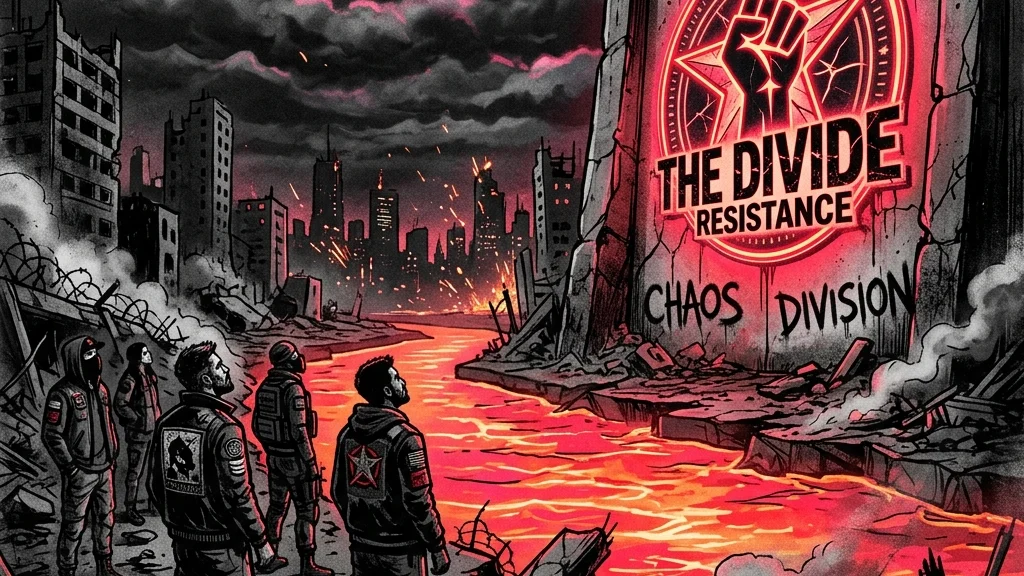
The integration of the IDF and Hamas into the daily lives of Israelis and Palestinians reflects distinct models of societal mobilization. In Israel, the integration is characterized by universal conscription, national unity, and a multifaceted role in civil society. The IDF is deeply ingrained in the identity of Israelis, and its influence extends far beyond military matters. In contrast, Hamas's integration involves not only political and military dimensions but also a significant role in providing social services and shaping educational and cultural aspects. Belonging to Hamas is tied to shared political and religious ideologies, contributing to a distinct Palestinian identity.
The core message of the 'No One Is Innocent' campaign is a provocation designed to expose the reality of modern asymmetric warfare. When a society is fully mobilized for conflict, the traditional lines between civilian and combatant become increasingly blurred. This isn't just a military reality; it is a psychological and social one. In both Israeli and Palestinian contexts, the 'civilian' is often a reserve soldier, a former fighter, a future combatant, or a logistical supporter. The Israeli Identity and Palestinian Identity are not merely cultural tags; they are political statements forged in the crucible of endless conflict.
The IDF in Israeli Civil Life: More Than a Military
The Israel Defense Forces (IDF) is not only a military organization but also plays a prominent role in societal functions, including disaster relief, border security, and various community engagements. Reserve duty is a constitutional reality for most citizens, meaning that even after completing mandatory service, individuals remain connected to the military throughout their lives. The IDF's presence is evident in daily life, reflecting a societal norm where military service is considered a collective responsibility. This deep integration means that the Israeli Identity is intrinsically linked to the military experience.
Factors Rooted in Israeli Support for the IDF
Israeli support for the military is not just a top-down mandate; it is a bottom-up cultural phenomenon. Understanding the Israeli Identity requires looking at these four pillars:
Security Concerns: Israel has faced systemic security challenges since its establishment in 1948. From the War of Independence to the current asymmetric threats, the IDF is viewed as the sole barrier between existence and annihilation.
Mandatory Military Service: Conscription is a rite of passage. Most Jewish citizens serve 32 months (men) or 24 months (women). This shared experience creates a sense of national unity and reinforces the notion that the defense of the nation is every citizen's duty.
National Identity: The IDF is a symbol of resilience. Israelis often express support for the military as a reflection of their commitment to the survival and prosperity of the state. It is the 'People's Army.'
Social Integration: The military serves as a melting pot. Individuals from diverse backgrounds—secular, religious, Ashkenazi, Sephardic—come together in the ranks. This integration contributes to a sense of shared destiny.
The 'One Day They'll Be' Reality: Reserve Duty and Readiness
In Israel, a 'civilian' on the street today could be a tank commander on the border tomorrow. This state of constant readiness is a defining feature of the Israeli Identity. The phrase 'No One Is Innocent' speaks to this reality: when the entire populace is part of the military infrastructure, the concept of a purely detached civilian population disappears. Every home is a potential barracks, and every car a potential transport. The Israeli Identity Heavy Hoodie is designed for those who understand that readiness is a lifestyle, not just a policy.
Hamas in Palestinian Life: The Social and Ideological Network
Hamas is integrated into Palestinian life, particularly in the Gaza Strip where it functions as the governing body. Beyond its political and military wings (The Izz ad-Din al-Qassam Brigades), Hamas has established a comprehensive social infrastructure, including schools, hospitals, and charities. This social integration extends into the education system, where the group's influence shapes the curriculum and fosters a specific ideological narrative. The Palestinian Identity is thus often influenced by this all-encompassing presence.
Multifaceted Support for Hamas and the Palestinian Cause
To understand the Palestinian Identity, one must look at how Hamas has positioned itself as both a resistance movement and a social safety net:
Resistance against Occupation: Hamas originated as a resistance movement against Israeli occupation. Many Palestinians perceive it as the only force actively opposing what they view as systemic oppression.
Political Representation: Following its victory in the 2006 elections, Hamas gained a level of political legitimacy. They are seen by many as the alternative to the perceived corruption of the Palestinian Authority.
Social Services (Dawa): Hamas operates a network of schools, hospitals, and welfare programs. This 'Dawa' system fills the vacuum left by failed state institutions, garnering loyalty from those who depend on these services.
Nationalist and Islamic Identity: Hamas incorporates a strong nationalist and religious narrative. This aligns with the cultural and religious identity of Palestinians who seek both political independence and ideological preservation.
The Indoctrination of Youth: Future Combatants
A critical aspect of the Palestinian Identity in the context of conflict is the focus on the youth. In Gaza, children are often raised in an environment that glorifies the 'Mujahideen' (fighters). Summer camps, television programs, and school curricula often emphasize the virtues of resistance and martyrdom. This 'One Day They'll Be' aspect is a tragedy of the conflict: children are conditioned from birth to view themselves as future participants in an eternal struggle. Our Palestinian Identity Premium Sweatshirt is a reminder that the struggle for justice is often passed down through generations, for better or worse.
The Citizen vs. The Combatant: A Modern Blur
In the traditional rules of war, the distinction between a combatant and a civilian is paramount. Civilians are supposed to be protected, while combatants are legitimate targets. However, in the 21st century, this distinction is being systematically eroded. When a society is permanently mobilized, the 'civilian' becomes a component of the military machine. They provide the tax revenue, the logistical support, and the ideological justification for the conflict. The Propaganda collection at CauseStand is an audit of this erosion. We are asking: at what point does a passive supporter become an active participant? In the Arena of modern conflict, the 'neutral' observer is a rare species.
The Infrastructure of Mobilization: Schools and Social Services
Societal mobilization begins in the classroom. From the nursery rhymes of Gaza to the field trips of Tel Aviv, children are taught to identify with the struggle. This 'Infrastructure of Mobilization' ensures that by the time an individual reaches adulthood, their Israeli Identity or Palestinian Identity is inseparable from the military narrative. This is the misinformation of 'nationalist education'—it is actually the pre-loading of the combatant mindset. We are auditing the special interests who profit from this lifelong enrollment.
The Reserve Reality: Every Home a Barracks
In a mobilized society, the home is no longer a sanctuary of peace; it is a node in the military grid. In Israel, the presence of weapon lockers and reserve gear in middle-class apartments is a daily reality. In Gaza, the integration of military infrastructure into civilian residential blocks is a strategic choice. This 'Reserve Reality' means that the war is never 'over there'; it is always right here. The Oversight collection highlights this total saturation of life by the establishment's military needs. We are auditing the budget accountability of a nation that spends more on its barracks than its schools.
The Religious Dimension: Holy War vs. Sacred Defense
The conflict is often framed in religious terms, which adds a layer of 'sacred' justification for the mobilization. For Hamas, the struggle is a 'Jihad' (holy struggle). For many in the Israeli right, the defense of the land is a 'Mitzvah' (divine commandment). This religious dimension turns political disagreement into cosmic warfare, making compromise impossible. The traders of religious ideology are the most dangerous of all, as they offer no path to peace that doesn't involve the total defeat of the other. We are auditing the propaganda of the holy war.
The Psychological Toll: Militarizing the Mind
Constant mobilization has a profound psychological cost. It creates a state of 'hyper-vigilance' where every stranger is a potential threat and every shadow a potential enemy. This militarized mindset leads to the dehumanization of the 'other.' When you see the world through the lens of 'No One Is Innocent,' you lose the ability to see the human face of the enemy. The Propaganda collection is a tool for psychological de-escalation, reminding us that the first casualty of war is always empathy. We are auditing the Hall of Shame of the mind.
The Economic Engine: Conflict as a Driver of Growth
Conflict is not just a political tragedy; it is an economic engine. The Israeli tech sector depends heavily on military R&D, and the Gazan tunnels were the primary pathway for goods under the blockade. Both societies have built economies that are, in some ways, dependent on the continuation of the struggle. This is the corporate funding of the conflict. When the traders of war are the primary drivers of GDP, the incentive for peace vanishes. We are auditing the 'War Rake' that takes a cut of every bullet and every bandage.
The Foreign Aid Loop: Funding the Two-Identity State
The mobilization of both societies is fueled by massive amounts of foreign aid. Whether it is the $3.8 billion annual gift from the U.S. to the IDF or the millions in international aid that Hamas manages in Gaza, the conflict is globalized. This 'Foreign Aid Loop' ensures that neither side ever runs out of the resources necessary to continue the fight. This is the foreign lobbying success of the establishment. We are auditing the tax dollars that fund the 'One Day They'll Be' reality for children on both sides.
The Media's Role: Perpetuating the Binary
The international media plays a critical role in manufacturing consent for the ongoing mobilization. By focusing on the 'clash of identities' rather than the shared humanity, the media ensures that the world takes a side rather than demanding a solution. This is the misinformation of the 24-hour news cycle. The Propaganda series is the visual antidote to the media's binary narrative. We are auditing the Establishment's screen Boris. We see the screen that hides the people behind the slogans.
The Global Perspective: Comparative Mobilization
The 'No One Is Innocent' reality is not unique to the Middle East. From the street gangs of Chicago to the proxy wars of Eastern Europe, we see the same pattern of societal mobilization. When the state fails to provide security, people turn to militant identities for protection. This is a global oversight failure. The Propaganda collection is the uniform of the global auditor who sees the same machine working everywhere. We are auditing the political corruption of the identity itself.
The Biblical Warning: Woe to those who call for War
The scriptures offer a stark warning to those who glorify conflict. Matthew 26:52 states: 'Put your sword back in its place, for all who draw the sword will die by the sword.' The Establishment's commitment to perpetual mobilization is a commitment to perpetual death. James 4:1 asks: 'What causes fights and quarrels among you? Don’t they come from your desires that battle within you?' The traders of the ID and the Hamas narrative are feeding these desires for their own gain. In the Arena, we stand for the peace that surpasses the binary. We are auditing the soul of the combatant.
The Cyber Front: Digital Identities in the Arena
In the digital age, mobilization happens on the keyboard before it happens on the battlefield. Social media is the new front line, where Israeli Identity and Palestinian Identity are used as hashtags of war. This 'Cyber Front' is where misinformation is manufactured and distributed at scale. The Propaganda collection features the 'DIGITAL WARRIOR' design to remind us that our online behavior is also a form of combat. We are auditing the oversight of the digital garrison. You are either an auditor of the data or a casualty of the narrative.
The Future of Identity: Can the Cycle be Broken?
Breaking the cycle of mobilization requires a radical new way of thinking about identity. It means choosing to be a human being before being a citizen of a state or a member of a movement. This is the goal of political reform in the 21st century: the decoupling of identity from the military infrastructure. The Oversight collection at CauseStand is the beginning of this decoupling. We are auditing the future by refusing to be defined by the past. We are the architects of the de-militarized soul.
The Machine Mind of Conflict: Why Peace is Bad for Business
We must name the rot: the Machine Mind of the global establishment. For the defense contractors, the lobbyists, and the power-brokers, peace is a threat to the bottom line. Conflict provides the data, the funding, and the justification for their existence. This is the ultimate political corruption: the structural preference for war over peace. The Propaganda series is the visual protest against this cold logic. We are auditing the profit margins of the apocalypse.
Reclaiming Sovereignty: Beyond the Binary Identity
True sovereignty is the ability to define yourself outside of the state's military needs. It means refusing to be a combatant, even in a mobilized society. This is the 'Exit' strategy of the soul. By wearing activist apparel like CauseStand, you are asserting your independence from the establishment's binary. You are auditing the social justice implications of your own identity. We are the sovereign auditors of our own lives.
The Identity series is not just about Israel and Palestine; it is about the condition of the human race in a permanent state of mobilization. But the audit is only the first step. The second step is correction. That correction happens when we stop being 'combatants' and start being 'auditors.' When we stop following the traders of hate and start standing together in the Arena of truth. join CauseStand, wear the Propaganda, and let's make it clear: the binary is broken. We have documented the mobilization, we have named the machine, and we have provided the uniform for the soul's resistance. The only thing left to do is Stand. Stand for the human, stand for the peace, and stand for the future. The Arena is waiting.
Works Cited
Chomsky, Noam. 'Manufacturing Consent: The Political Economy of the Mass Media.' Pantheon, 1988.
Pappe, Ilan. 'The Ethnic Cleansing of Palestine.' Oneworld Publications, 2006.
The Holy Bible, NKJV. Matthew 26:52, James 4:1.
CauseStand Research. 'The Identity of Conflict: of Societal Mobilization.' 2026.
Unusual Whales. 'The Economics of the Tunnel Economy: Gazan Trade Data.' 2024.
Haaretz Archive. 'The History of the IDF as the People's Army.' 2023.
Al Jazeera Investigative Unit. 'The Dawa System: Hamas's Social Services Network.' 2024.
Herman, Edward S. 'The Real Terror Network.' South End Press, 1982.
Zinn, Howard. 'A People's History of the United States.' (Context for Bottom-Up History).
The algorithm hides the truth. Secure direct transmission to receive our unfiltered Intelligence Reports and get 15% off your first gear drop instantly.
WAIT. DON'T LEAVE EMPTY HANDED.
JOIN THE WAR ROOM
GET 15% OFF YOUR FIRST GEAR DROP
The algorithm hides the truth. Secure direct transmission to receive our unfiltered Intelligence Reports and an exclusive discount code instantly.