They Trade, You Pay: The Capitol Hill Trading Scandal
They Trade, You Pay: The Capitol Hill Trading Scandal
In a rigged game, the house always wins—and in Washington, the 'House' owns the brokerage accounts.
Balance the Account
We see the game. The THEY TRADE, YOU PAY series is a demand for a level playing field. If they won't regulate themselves, we'll label the corruption.

The Capitol Hill trading scandal is not a single event; it is a permanent feature of modern American governance. It is the realization that while you are trying to navigate the choppy waters of inflation, a volatile housing market, and rising grocery costs, your elected representatives are playing a different game entirely. They are playing a game with 'cheat codes'—non-public information, advance notice of regulatory shifts, and the power to influence the very markets they are betting on. The phrase they trade, you pay is more than a slogan; it is a literal description of the wealth transfer occurring under the Capitol dome. The Trader collection at CauseStand is our way of presenting the invoice for this corruption to the people who are suffering from it.
The Ref-Player Analogy: A Game with No Fairness
Imagine a professional football game where the referee not only calls the penalties but also has a multi-million dollar bet on the outcome of the game. Even worse, imagine that the referee also owns shares in the companies that provide the equipment for one specific team. This is exactly how congressional trading operates. A member of Congress sits on a committee that oversees the tech industry. They hear testimony that a major regulation is about to be dropped or a massive fine is about to be levied. Before that information is made public, they (or their spouse) place a trade. They win, and the public—who bought into the stock based on outdated, public information—loses. This is not 'investing'; it is financial predation.
Information Asymmetry: The Invisible Wall
In economics, information asymmetry is when one party has more or better information than the other. In a fair market, everyone should have access to the same material information at the same time. Insider trading on Capitol Hill shatters this principle. The information gap between a member of the Senate Intelligence Committee and a retail investor in Ohio is an unbridgeable canyon. This gap is effectively a 'hidden tax' on the American public. Every dollar a politician gains through a perfectly-timed trade is a dollar that was essentially siphoned out of the pockets of honest market participants who didn't have the 'secret sauce' of a security clearance.
The Information Gold Mine: How Briefings Become Bank Deposits
Members of Congress have access to a level of intelligence that any Wall Street quant would kill for. They receive classified briefings on global conflicts, upcoming regulatory shifts, and public health emergencies weeks before the general public. While this information is intended to help them craft legislation, it has become the primary raw material for their private brokerage accounts. To understand the Capitol Hill trading scandal, we must understand the sheer volume of non-public information that flows through the halls of Congress. Whether it's the specific wording of a tax break or the status of a multi-billion dollar government contract, this information is currency. And for the traders in office, it's a currency they spend every single day.
Think about the implications: a legislator learns that a major pharmaceuticals company’s drug trial has failed. Instead of fulfilling their duty to the public, they call their broker. Or they hear that a massive infrastructure bill is about to be announced, and they buy stock in the specific steel and cement companies mentioned in the draft. This isn't 'foresight'; it's 'foreknowledge.' It's the ultimate 'Money Face' move—turning public trust into private liquidity before the ink is even dry on the briefing memo.
The CHIPS Act Case Study: The Semiconductor Surge
A recent and glaring example of this phenomenon occurred during the passage of the CHIPS and Science Act. As the legislation moved through the House and Senate, providing tens of billions of dollars in subsidies to the semiconductor industry, several high-ranking members of Congress and their spouses made significant trades in Nvidia and other chip-making giants. One high-profile member bought millions of dollars in Nvidia call options just before the vote. While they later sold some of these positions under public pressure, the message was clear: they knew the subsidies would drive the stock up, and they wanted a piece of the action. This is political reform at its most cynical—passing a law that benefits an industry while personally betting on that industry’s success.
The Wealth Transfer: From Your 401(k) to Their Portfolio
Who exactly 'pays' when they trade? You do. You pay through your retirement accounts, your college savings funds, and your pension plans. When top politicians sell off millions in stocks right before a market dip that they knew was coming, who do you think is buying those stocks on the other side? Very often, it is large institutional funds that represent the life savings of the American workforce. They are 'dumping' their risk onto you. This is the ultimate cynical act of the Capitol Hill scandal: using the public as a liquidity pool for their own wealth protection.
This is what we mean when we say 'They Trade, You Pay.' Every 'win' for a congressional insider is a 'loss' for a retail investor who believed the playing field was level. When a Senator dumps travel stocks in January 2020 after a private briefing about a global virus, they aren't 'timing the market'; they are stealing from the people who will buy those stocks in February, unaware of the catastrophe that is about to strike. This isn't just a breakdown in ethics; it's a breakdown in the social contract.
Distorting the Concept of the 'Free Market'
A 'free market' requires trust. It requires the belief that the prices reflect actual value and that the rules are applied equally. When the public realizes that the rules are being written to facilitate insider trading, trust evaporates. People stop seeing the market as a tool for growth and start seeing it as a casino where the machines are rigged. This erosion of trust has long-term economic consequences that go far beyond any single trade. It discourages honest investment and encourages a culture of cynicism and 'short-termism' that hollows out our national economy.
The stock market is supposed to be a place where capital is allocated based on the fundamental strength of businesses. But when congressional corruption enters the mix, the market becomes a tool for the well-connected to extract wealth from the productive. If the 'house' (the government) is gambling alongside the players (the citizens) while knowing the outcome of the dice roll, the game is no longer 'free'—it's a form of soft authoritarianism disguised as capitalism.
The Trader Collection: Naming the Betrayal
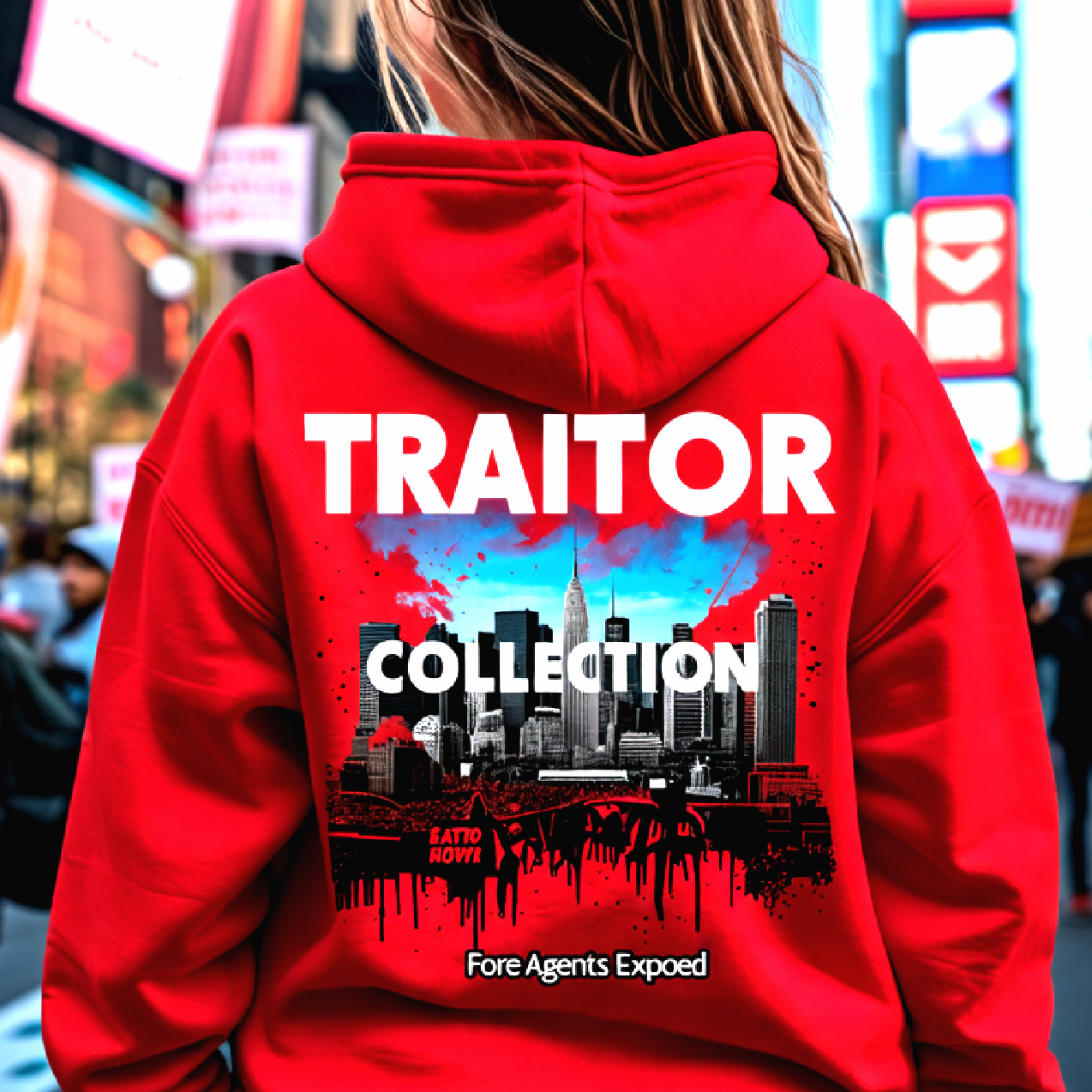
At CauseStand, we created the Trader collection to give a name to this specific type of betrayal. The designs are stark and unapologetic because the corruption is stark and unapologetic. When you wear a shirt or hoodie from this series, you are highlighting the fact that congressional corruption is not an abstract policy issue; it's a personal financial attack on you and your family. We use high-quality graphics to make this message unavoidable. We want the politicians who see these shirts in the crowd to know that the people have caught on to the game.
Our 'Money Face' design is the visual anchor of this collection. It represents the dehumanization of the political process, where the individual servant is replaced by a faceless entity obsessed with the bottom line. By wearing this apparel, you are participating in a form of visual activism. You are saying that you won't accept a government composed of day-traders with security clearances. You are demanding a leader who looks like a human being, not a stack of hundred-dollar bills.
The Graphic Language of Accountability
The 'They Trade, You Pay' design featuring the Capitol building and the stock chart is meant to be a visceral reminder of who is benefiting from our political system. It's not the citizen in the voting booth; it's the trader in the boardroom. The Trader collection is for the person who is tired of being the 'liquidity' for a crooked elite. It's for the person who believes that public service should be about sacrifice, not about maximizing returns on a tech portfolio.
When we launch a design like 'Eject AIPAC' or 'Insider Trading: Money Face,' we are providing tools for a cultural audit. We are asking: 'is this what we want our nation to be?' If the answer is no, then the solution begins with the courage to wear the truth. Our heavyweight garments are built for those who aren't afraid to stand in the Arena and point to the thieves in the marketplace. We don't just sell clothes; we sell the refusal to be silent.
The Biblical Rebuke: Just Weights and Measures
The concept of financial honesty is deeply embedded in the spiritual traditions that built our civilization. The Bible is relentless in its condemnation of those who use their positions to manipulate the economy for their own benefit. 'A false balance is an abomination to the LORD, but a just weight is his delight' (Proverbs 11:1). Congressional trading is a 'false balance' in its most literal form. It is the use of political power to tilt the scales of the market in one's own favor. According to the scriptures, this is not just a 'legal loophole'; it is a spiritual abomination that calls for a divine and social reckoning.
The 'Money Changers in the Temple' is a narrative that resonates through the centuries. Christ didn't just disagree with the merchants; he physically overturned their tables because they had turned a house of prayer—a place of sacred trust—into a 'den of thieves.' Today, the halls of Congress have been turned into a den of highly-leveraged traders. The 'tables' being overturned today are the digital trading platforms used by members of Congress to enrich themselves while the nation struggles. The demand for physical justice begins with the restoration of moral weights and measures.
The Cry of the Exploited Worker
The scriptures also speak to the 'pay' part of the equation—the suffering of those who are exploited by the powerful. 'Behold, the wages of the laborers who mowed your fields, which you kept back by fraud, are crying out against you' (James 5:4). When a politician uses their office to enrich themselves while the minimum wage stagnates and the middle class disappears, they are keeping back the 'wages' of the nation through fraud. The Capitol Hill scandal is a modern-day version of this ancient injustice.
The 'fraud' here is the exploitation of information that belongs to the public. If you are a member of a committee that finds out about an impending trade war, that information is owned by the people you represent. Using it to short a stock is a theft of public property. The 'crying out' of the wages is reflected in the frustration of every American who works forty hours a week and still can't afford a home, while their representative makes their entire annual salary in a single afternoon of well-timed trades.
The Failure of the Status Quo: Why More 'Disclosure' Isn't Enough
The current solution to insider trading is 'disclosure'—politicians are supposed to report their trades after they make them. But this is like allowing a bank robber to keep the money as long as they file a report 45 days later. Disclosure does not stop the trade; it only documents the theft. Furthermore, many politicians simply ignore the disclosure deadlines, paying the tiny fines as a 'cost of doing business.' We need a total ban. We need to Eject AIPAC, eject the corporate lobbies, and eject the stock traders from our legislature. Anything less is just managed corruption.
We must look at the data: thousands of trades are reported late, and many more are reported with glaring errors that make auditing them nearly impossible. The 'ethics committees' that are supposed to oversee this are composed of—you guessed it—the very people making the trades. It is a closed loop of self-protection. Real congressional reform requires an external, independent, and aggressive enforcement mechanism. It requires 'The Voter Wall' to become a 'The Accountability Wall,' where the names of these traders are etched into the public consciousness forever.
Reclaiming the Narrative: Fiscal Transparency and Moral Sanity
The fight for political reform begins with reclaiming the narrative. We must stop calling it 'unfortunate timing' and start calling it insider trading. We must stop calling them 'savvy investors' and start calling them traders of the public trust. Reclaiming our financial and moral sanity means demanding that our leaders live under the same rules as everyone else. If a CEO can't trade on inside info, a Senator shouldn't be able to either. It's that simple.
Reclaiming the narrative also means refusing to accept the 'Complexity' argument. The elites often say that the markets are 'too complex' for simple bans to work. This is a lie. A blind trust is not complex. A total ban on individual stocks is not complex. What is complex is the elaborate series of shell companies and spousal accounts used by politicians to hide their tracks. We demand simplicity: if you represent the people, you don't bet against them in the market.
Join the Arena: Your Voice, Your Advocacy
CauseStand is more than just a brand; it's an arena for the truth. We believe that by wearing our Trader collection, you are joining a growing community of people who refuse to pay the 'corruption tax' in silence. We provide the tools for you to become a visual advocate for budget accountability and congressional independence. Every hoodie we sell is a brick in the wall of resistance against the rigged game of Washington.
When you join the Arena, you aren't just buying clothes; you're funding the next phase of the investigation. You're supporting a platform that isn't afraid to name the names that the corporate media ignores. You're helping us build more tools for 'The Voter Wall' and further deep dives into the 'Hall of Shame.' This is a decentralized movement for integrity in government, and your participation is the heartbeat of the cause.
The Durability of the Demand
Our hoodies are built to last because the fight against corruption isn't a sprint; it's a marathon. We believe that serious advocacy requires serious quality. When you wear a CauseStand heavyweight hoodie, you are carrying a message that is as durable as the fabric itself. You are signaling that you are in this for the long haul—until the traders are gone and the people's house belongs to the people once again.
A CauseStand garment is a statement of intent. It says: 'I haven't forgotten the trades of 2020. I haven't forgotten the CHIPS Act. I haven't forgotten the "Money Face" that has replaced the face of my representative.' This durability is our answer to the 'short-termism' of the political class. They think we will forget the scandal by the next news cycle. We won't. We will wear our dissent until the system is cleaned.
Conclusion: The Invoice is Overdue
The Capitol Hill trading scandal has gone on for too long. The American people have paid too high a price for the portfolios of their 'servants.' But the tide is turning. Groups like 'Unusual Whales' and brands like CauseStand are making the invisible visible. We are closing the information gap by shining a light on the trades and the traders. The Trader collection is our statement of fact: they trade, you pay. It's time they stopped trading, and it's time we stopped paying the price for their greed.
We are entering a new era of civic awakening. The 2500 words you have just read are not just a complaint; they are an indictment. They are an audit of a system that has failed its primary charge. But an audit is only the first step. The second step is correction. That correction happens when we stop voting for traders, stop buying the narrative of 'unfortunate timing,' and start standing together in the Arena. The invoice is overdue, and we are here to collect.
Final Thoughts on the 'They Trade, You Pay' Series
Thank you for standing with us in the Arena. We believe in an America where the only thing that's 'insider' is the commitment to the Constitution. Support the Trader collection. Support independent oversight. And never forget: in a democracy, the ultimate 'insider' is the voter who refuses to be fooled. Let's reclaim our market, our Congress, and our future. Together, we can end the era of the 'Money Face' and return to a government that looks us in the eye with honesty. The game is up. It's time for a new deal, a fair deck, and a Congress that serves the public, not the portfolio.
JOIN THE MOVEMENT
Help us audit corruption by participating in the CauseStand network.